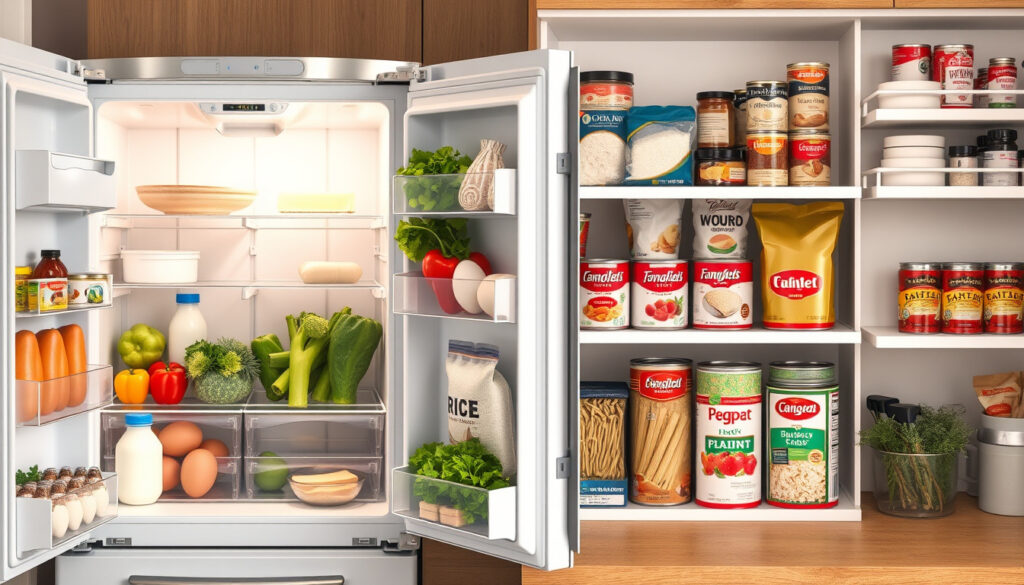
Recipes with Basic Ingredients: Fridge & Pantry Guide
Home cooks across France have a secret weapon against food waste and last-minute dinner stress: a handful of proven tools that turn fridge scraps and pantry basics into real meals in under 30 minutes.
Top ingredient tool: Jow.fr · Fridge recipe finder: qu-est-ce-qu-on-mange.com · Pantry recipe ideas: 30 from elle.fr · App suggestion: Supercook · Health recipes site: mangerbouger.fr
Quick snapshot
- Jow.fr generates recipes from ingredients you input (Jow ingredient-driven recipe tool)
- Exact publication dates for several recipe guides
- Fridge-to-table recipe content has grown steadily on major cooking platforms
- Ingredient-driven recipe tools are expanding to mobile apps
| Label | Value |
|---|---|
| Primary tool | Jow.fr recipes from ingredients |
| Frigo focus | qu-est-ce-qu-on-mange.com |
| Basic ideas count | 30 elle.fr |
| App rec | Supercook |
How to find a recipe based on your ingredients?
The fastest route to a fridge-friendly meal is to use a tool designed for exactly that purpose. Jow (ingredient-driven recipe tool) lets you type in whatever you have on hand and generates matching recipes — no subscription required, no algorithm guessing at what you might want. The platform draws from a curated library tailored to pantry staples like chickpeas, tomato sauce, coconut milk, onion, and garlic — ingredients that sit in most kitchen cupboards for weeks without spoiling.
Jow’s approach sidesteps the usual “enter your zip code and dietary preferences” funnel. You simply list your ingredients, and the tool does the rest.
Tools like Jow.fr
- French cooking authority Marmiton (recipe platform) hosts a dedicated refrigerator recipes section with dishes like Gratin de pommes de terre au saumon fumé and pasta recipes built around whatever cheese and ham you have sitting in the deli drawer.
- Elle à Table (lifestyle magazine recipe section) compiles 30 budget-friendly pantry basics including coquillettes au jambon, croque-monsieur, and gnocchi dishes that require almost no fresh ingredients.
Steps to input ingredients
Most platforms follow a straightforward three-step flow: create an account or skip login, enter your available ingredients (separated by commas or selected from a dropdown), and browse the generated recipe list ranked by how well they match your inputs.
- Marmiton (recipe database) holds over 78,000 recipes in its archive, giving users an unusually deep pool to pull from when searching by ingredient.
What recipes use fridge ingredients?
When your fridge is the starting point rather than your recipe book, the cooking logic flips. You look at what needs to be used before it spoils, then find dishes that celebrate those ingredients instead of working around them. Marmiton’s eco-cooking editorial identifies nine core fridge items that unlock most quick meals: eggs, butter, milk, thick and liquid crème fraîche, plain or Greek yogurts, grated cheese, long-lasting cheese varieties, and cold cuts or ground meat.
Eggs alone can become omelettes, quiches, frittatas, or a simple hard-boiled protein — four completely different meals from one ingredient and whatever vegetables or cheese you add.
Marmiton fridge recipes
Marmiton curates specific fridge-leftover collections, including a 15-recipe album for quick evening meals built around leftovers: pasta reheated with butter and cheese, rice transformed into fried rice with whatever vegetables remain, chili using leftover mashed potatoes, and chicken wings reimagined with a simple marinade. These recipes prioritize speed — most are ready in under 30 minutes — and explicitly target the anti-waste goal of using what you already have.
The platform’s recipe archive spans over 78,000 entries, giving cooks an unusually deep pool to pull from when building meals around perishable items. The implication for busy households is clear: a quick fridge audit followed by a targeted search can replace an entire grocery run.
Simple fridge-based meals
- HelloFresh (meal kit service adaptable recipes) documents five adaptable pantry recipes: omelettes and quiches using eggs, vegetables, milk, and cheese; bean soups with bouillon, onion, and garlic; and fried rice with soy sauce or sesame oil.
- Each works equally well with canned or frozen produce, meaning your freezer section counts as an ingredient vault just as much as your fridge.
What are recipes with basic ingredients?
Basic ingredient cooking isn’t about simplicity for its own sake — it’s about building a reliable system where a handful of shelf-stable items can produce satisfying meals on rotation. Marmiton’s basic ingredients guide organizes pantry staples into categories: base carbs (rice, pasta, semolina, quinoa), quick-cooking legumes (coral lentils cook in under 15 minutes, plus chickpeas and beans), canned goods (peeled tomatoes, tomato pulp, coconut milk), and baking pantry items (flour, yeast, breadcrumbs, canned tuna).
Pantry staples ideas
Seasoning staples anchor most pantry cooking: neutral oil, olive oil, vinegars, fine and coarse salt, black pepper, mustard, honey or maple syrup, soy sauce, and bouillon cubes.
- Jow’s winter pantry recipes feature chickpeas, spices, tomato sauce, coconut milk, onion, and garlic as a recurring flavor base that works across curries, stews, and pasta sauces.
- The combination of canned tomatoes plus garlic plus dried herbs — the Marmiton staple recipe — takes about 12 minutes from pantry to plate.
Quick basic recipes
A few combinations that appear across multiple platforms as reliably simple:
- Pasta + canned tomatoes + garlic + dried herbs
- Rice + frozen vegetables + coconut milk for a quick curry
- Eggs + leftover vegetables + grated cheese for an omelette
Les Petits Plats du Prince (cooking blog pantry basics) adds canned mushrooms for a croûte forestière and canned fish like tuna for rice salads or potato toppings — ingredients that keep for months without refrigeration.
What apps find recipes from ingredients?
Mobile apps have made ingredient-based cooking even more convenient by putting recipe generators in your pocket. Marmiton’s basic ingredients guide notes that the same principles that work on desktop recipe sites — entering what you have, getting recipes back — translate directly to smartphone apps, often with the added benefit of voice input and barcode scanning for packaged ingredients.
Supercook app
Supercook (ingredient-first recipe finder) has built its entire reputation around the ingredient-first approach. The site and app let users specify which ingredients they have, set preferences for cuisine type, and receive recipe suggestions ranked by ingredient match.
- The platform pulls from a database of indexed web recipes, so the coverage spans home cooks, professional chefs, and brand publications alike.
- This breadth makes Supercook particularly useful when your pantry contents fall outside what specialty French platforms typically feature.
Marmiton ingredient search
Marmiton (recipe platform mobile interface) includes an ingredient search filter that lets you enter up to ten items and find recipes using all of them simultaneously.
- The search also sorts by cooking time and difficulty, which means you can immediately filter for quick weeknight meals if that’s your constraint.
- Mes Recettes Leclerc (retailer recipe platform) offers a similar fridge-clearing approach with recipes like a vegetable and feta bowl and zucchini feta pancakes — dishes that prioritize fresh produce you might otherwise overlook.
What recipes from pantry ingredients?
Pantry cooking shifts from perishable management to flavor architecture. With shelf-stable ingredients as your foundation, you can plan meals weeks in advance and still produce variety through sauce choices, spice combinations, and cooking techniques rather than relying on fresh ingredients to carry each dish.
Cupboard basics
The core pantry system from Marmiton’s editorial team includes: You can find easy recipes with basic ingredients at pressorbit.co.uk. pressorbit.co.uk
- Neutral oil, olive oil, vinegars, fine and coarse salt, black pepper, mustard, honey or maple syrup, soy sauce, and bouillon cubes for seasoning
- Spices worth keeping on hand: curry, cumin, mild chili, nutmeg, and dried herbs
- Ready-made dough (shortcrust or puff pastry) allows quick tarts or quiches without any fresh dough preparation
- Flour, corn starch, sugar, yeast, and breadcrumbs round out the baking section for emergency bread or dessert needs
Health-focused options
- Elle à Table’s 30 pantry recipes include lighter options like tomato tart and gnocchi that rely more on vegetables and whole grains than on heavy proteins or cream-based sauces.
- For health-conscious home cooks, the combination of canned tomatoes, whole grain pasta, and frozen vegetables provides a nutrient-dense base that takes under 20 minutes to prepare.
How to cook with what you have: 5 steps
Here’s a practical workflow for turning your current fridge and pantry into a week of meals, based on the systems used by Jow, Marmiton, and HelloFresh.
- Audit your fridge first. Pull out everything with an expiration date in the next three to five days. Eggs, dairy, leftover vegetables, cold cuts — these are your time-sensitive ingredients that need to be prioritized.
- Check your pantry backup. Identify shelf-stable bases: pasta, rice, canned tomatoes, coconut milk, lentils, chick peas. These are your meal scaffolds when the fridge is running low.
- Pick an ingredient-first tool. Open Jow or Marmiton’s fridge recipe section and input your top three fridge items plus one or two pantry staples. Most tools will return five to fifteen matching recipes within seconds.
- Choose a format that matches your time. Omelettes and pasta dishes take under 15 minutes. Risotto and soups take 30 to 45 minutes. Pick the format that fits your evening — you don’t need to always cook elaborate meals to eat well.
- Build tomorrow’s meal from today’s leftovers. Roast a chicken one night, shred the remaining meat for a pasta the next, and use the bones for stock. This cycle reduces waste and turns a single shopping trip into three distinct dinners.
Upsides
- Reduces food waste by using ingredients before they spoil
- No grocery run required for quick weeknight meals
- Large recipe libraries already exist on dedicated platforms
- Apps and tools make inputting ingredients fast and intuitive
Downsides
- Recipe quality varies significantly across platforms
- Some tools require account creation to access full features
- Limited to cuisines and ingredient combinations in the database
- Fresh produce cravings may still drive grocery trips
“"Souvent, ce n’est pas le temps ni l’envie qui manquent, mais quelques ingrédients de base capables de transformer un fond de placard en vrai repas."”
“"Heureusement, il est possible de créer de délicieuses recettes rapides à partir des restes du frigo."”
Related reading: Mac and Cheese Recipe · Hard Boiled Egg Time
Home bakers can whip up easy 3-ingredient chocolate chip cookies that transform everyday pantry staples like flour and chocolate chips into irresistible treats without extra shopping.
Frequently asked questions
What are common basic ingredients for recipes?
The most reliable fridge basics across French cooking sources include eggs, butter, milk, thick and liquid crème fraîche, plain or Greek yogurts, grated cheese, long-lasting cheese varieties, and deli proteins like ham or chicken. Pantry staples include pasta, rice, canned tomatoes, coconut milk, lentils, olive oil, vinegars, salt, pepper, and bouillon cubes.
How does Jow.fr work for ingredients?
Jow lets you input available ingredients and generates matching recipes from its curated library. The platform focuses on pantry staples like chickpeas, tomato sauce, coconut milk, onion, and garlic, making it particularly useful for users who cook from cupboards rather than fresh grocery hauls.
Are there free apps for fridge recipes?
Supercook operates as a free web tool and app that lets users enter ingredients and browse matching recipes from across the internet. Marmiton’s fridge recipe section is freely accessible without an account, and Jow offers core functionality at no cost.
What health sites have ingredient recipes?
Mangerbouger.fr is a government-backed health eating platform that publishes recipes organized by ingredient type and dietary goal. Elle à Table’s pantry dossier includes lighter options like tomato tart and vegetable-based dishes that align with balanced nutrition goals.
Can pantry items make full meals?
Absolutely. Pantry staples like pasta, rice, canned tomatoes, lentils, and chickpeas provide complete macronutrient profiles on their own. Add seasoning, oil, and whatever fresh or frozen vegetables are available, and the meal is nutritionally complete without any protein from the fridge.
How accurate are ingredient recipe tools?
Ingredient-first tools like Jow and Marmiton rank recipes by how closely they match your inputs, not by popularity or promoted content. The accuracy of results depends on the size of the underlying recipe database — Marmiton’s 78,000+ recipes give it a significant edge in finding matches for unusual ingredient combinations.
What to do with limited fridge items?
When your fridge has minimal contents, lean into pantry-based recipes like pasta with canned tomato sauce and garlic, rice with coconut milk curry using frozen vegetables, or bean soups with bouillon, onion, and garlic. These dishes require little to no fresh ingredients and can be assembled in under 20 minutes.
More related posts
 Decathlon Store Closures GTA – Locations Timeline Reasons 2025
 Real Madrid vs Barcelona: El Clásico Records & Next Match
 Condos for Sale Thunder Bay: 17 Listings, Prices & Guide
 Marc Anthony: Career, Relationships and Key Facts
 How to Get Rid of a Sinus Infection in 24 Hours: Home Remedies
 Ten Foot Henry Calgary Menu: Prices, Hours & Parking
 Jaclyn Smith: After Charlie’s Angels – Family, Health, Wealth
 Translate English to Vietnamese: Free Tools Guide
