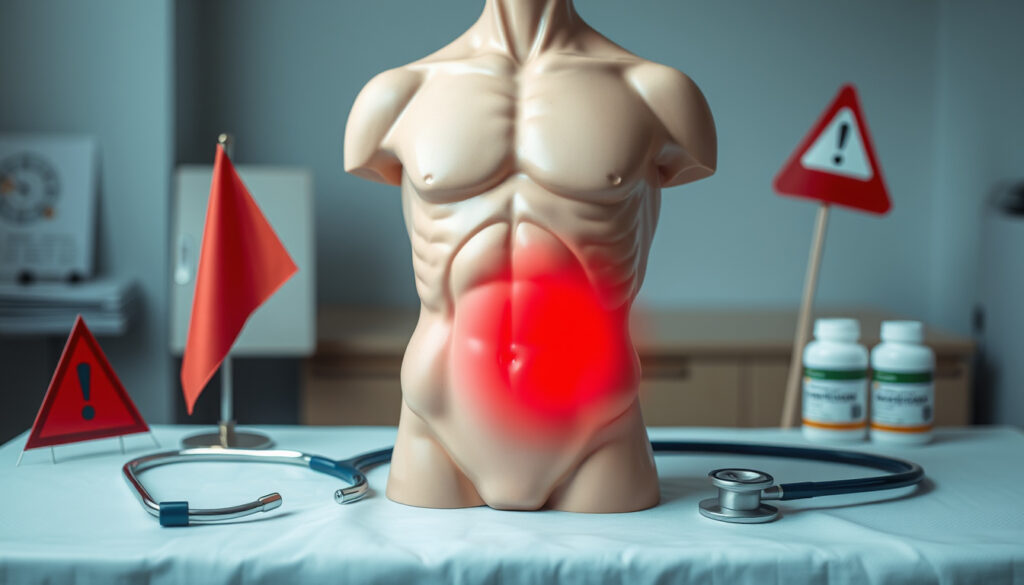
Left Side Abdominal Pain: Causes, Red Flags & Treatment
That dull ache on the left side of your belly can make anyone feel uneasy fast — and the range of possible causes makes it genuinely hard to self-diagnose. This guide maps out exactly what is on the left side of your abdomen, why it hurts, and which warning signs deserve a doctor’s visit right now. Drawing on physician-reviewed sources, we’ll walk through upper versus lower left pain, severity-ranked causes, and the red flags that clinical guidelines use to separate harmless discomfort from something serious.
Lower left pain link: Diverticulosis and diverticulitis · Upper left causes: GERD, pancreatitis, gastritis · Organs involved: Stomach, spleen, pancreas, left kidney · Key red flag sensitivity: 100% for IBD in children
Quick snapshot
- Pain in the lower left abdomen most often links to diverticulosis and diverticulitis (Cleveland Clinic)
- Upper left quadrant pain can originate from the pancreas, spleen, stomach, or left kidney (Cleveland Clinic)
- Which specific organ is the exact source without imaging or physical examination (Ubie Health)
- Gender-specific prevalence rates for common left-side conditions remain poorly defined in general adult populations (Medical News Today)
- Pancreatitis pain worsens after eating and can radiate to the back — this pattern alone is a reason to seek care promptly (Ubie Health)
- A Swedish study covering 317 children found that 10.1% of those referred for long-term abdominal pain had an organic diagnosis — red flags caught all cases of IBD (Acta Paediatrica)
Key clinical findings from peer-reviewed sources are summarized in the table below.
| Finding | Value | Source |
|---|---|---|
| Most common lower left cause | Diverticulosis and diverticulitis | Cleveland Clinic |
| Pancreatitis location | Often left or central | Providence Health |
| Female lower left factors | Reproductive, digestive, and urinary issues | Ubie Health |
| Red flags sensitivity for IBD | 100% | Acta Paediatrica |
| Red flags specificity for IBD | 64.1% | Acta Paediatrica |
| Non-FGID diagnosis rate (pediatric) | 10.1% of 317 children | Acta Paediatrica |
What organs are on the left abdomen?
Doctors split the left side of the abdomen into two zones — upper and lower — and each zone houses a distinct set of organs. Knowing which zone hurts narrows the list of suspects fast.
Upper left quadrant organs
The upper left quadrant contains the stomach, spleen, the main body of the pancreas, the left kidney, and the left portion of the liver. Costochondritis (inflammation of rib cartilage) and pericarditis can also produce pain that radiates into this area, making it easy to mistake for a digestive problem (Medical News Today). Bruised or broken ribs may cause upper abdomen pain, particularly after trauma.
Lower left quadrant organs
The lower left quadrant is dominated by the descending colon. In women, the left ovary and fallopian tube also sit in this region. Kidney stones that migrate through the left ureter will cause severe pain that often radiates toward the groin. An enlarged or ruptured spleen can generate upper left pain that radiates toward the flank.
Five organs in the upper left quadrant alone share overlapping nerve pathways, which explains why stomach pain can feel like a heart attack — and why a doctor can sort this out faster than you can guess.
What can cause pain on the left side of the abdomen?
Causes range from common digestive hiccups to conditions that need urgent treatment. The location — upper versus lower left — is the single most useful clue for narrowing the possibilities.
Mild causes
- Indigestion and gas: Trapped gas is one of the most frequent reasons for left-sided abdominal discomfort and usually resolves on its own.
- Constipation: A backed-up colon, particularly in the descending portion, creates cramping that is most noticeable on the left side.
- Gastritis: Inflammation of the stomach lining can cause burning or gnawing pain in the upper left abdomen (Medical News Today).
- Irritable bowel syndrome (IBS): IBS can cause episodic pain across the left abdomen, often tied to bowel movements (Medical News Today).
Serious causes
- Diverticulitis: One of the most important causes of persistent left-sided abdominal pain, diverticulitis develops when small pouches in the colon wall become inflamed or infected. Symptoms include steady pain in the lower left abdomen, fever, nausea, and changes in bowel habits (Ubie Health). The Cleveland Clinic notes that pain specifically in the lower left abdomen is most often related to diverticulosis and diverticulitis.
- Pancreatitis: The pancreas sits deep in the upper left abdomen, and when it becomes inflamed, the pain is severe and unrelenting. Pancreatitis typically causes pain that starts in the upper abdomen and radiates to the back, and it worsens after eating. It requires urgent medical care (Ubie Health).
- GERD: Gastroesophageal reflux disease often causes pain in the upper abdomen — sometimes radiating to the left side — and can extend to the chest, making it difficult to distinguish from a cardiac event (Mandaya Hospital Group).
- Kidney stones: Stone pain is often intense and comes in waves, radiating from the flank toward the groin. Associated symptoms include nausea, vomiting, and blood in the urine (Ubie Health). Stones can become obstructed as they migrate through the ureter and can cause fevers as they become more progressive.
- Kidney infection (pyelonephritis): Symptoms include frequent urination, pain when urinating, back and groin pain, fever, nausea, and vomiting. Kidney infections can be serious and require immediate doctor contact (Medical News Today).
- Inflammatory bowel disease (IBD): Crohn’s disease and ulcerative colitis can cause pain anywhere in the abdomen, including the left side (Medical News Today).
Mild left-side pain tends to come and go with meals or bowel movements. Serious conditions — diverticulitis, pancreatitis, kidney stones — tend to persist, worsen over time, or occur alongside fever, vomiting, or changes in urine or stool.
When should I worry about left abdominal pain?
Not every ache needs a hospital visit, but certain combinations of symptoms change the picture fast. Clinical red flags are the tool physicians use to decide whether further testing is warranted.
Red flag symptoms
- Persistent pain that does not improve over 24–48 hours
- Fever alongside abdominal pain
- Vomiting that does not subside
- Blood in stool or dark, tarry stools
- Blood in urine
- Sudden, severe pain that peaks within minutes
- Pain that radiates to the back, chest, or shoulder
A Swedish study published in Acta Paediatrica (volume 113, 2024) analyzed 317 children referred for long-term abdominal pain and found that red flags achieved 100% sensitivity for predicting inflammatory bowel disease — meaning no IBD case in the cohort was missed when these flags were present. Specificity was 64.1%, and the non-FGID diagnosis rate was 10.1%. Red flags caught only 45.5% of celiac disease cases, showing that their predictive power varies by condition (Acta Paediatrica (PubMed)).
The implication is that red flags work extremely well for IBD but leave meaningful gaps for other organic diseases like celiac disease.
Duration and intensity
Pain lasting more than two weeks — even mild pain — warrants a medical review. Sudden, severe pain that interferes with daily activities or wakes you from sleep is a same-day reason to call a doctor. Kidney stone pain and pancreatitis pain tend to be described as the most intense, often with a wave-like quality or radiating quality.
Go to an emergency department if you have fever plus abdominal pain, severe pain that peaks suddenly, vomiting that prevents you from keeping fluids down, or any sign of blood in stool or urine. These combinations can signal diverticulitis, kidney infection, pancreatitis, or bowel obstruction.
How to tell if left side pain is serious?
Two useful frameworks help differentiate manageable discomfort from something that needs investigation: upper versus lower pain location, and the pattern of accompanying symptoms.
Upper vs lower pain
- Upper left pain that worsens after eating and radiates to the back is a hallmark of pancreatitis. Pain that occurs after large meals and feels burning or acidic points toward GERD or gastritis.
- Lower left pain that is steady, persistent, and accompanied by fever or changes in bowel habits strongly suggests diverticulitis. Cramping that loosens after a bowel movement is more likely constipation or IBS.
Accompanying symptoms
A key diagnostic clue from the literature is that pancreatitis is probably the most severe and unrelenting pain among left-sided abdominal conditions, typically associated with nausea and vomiting. Kidney stone pain comes in waves and is often described as the worst pain a person has ever felt. GERD pain can extend to the chest, sometimes mimicking a heart attack (Mandaya Hospital Group).
Providers use a simple rule of thumb: if pain, fever, and a change in bowel or urinary habits all appear together, diverticulitis or a kidney infection moves to the top of the list — and imaging (CT or ultrasound) gets ordered same-day.
What this means is that symptom clustering matters more than any single symptom in isolation.
When is lower left abdominal pain in a female serious?
Women have additional structures in the lower abdomen that can produce left-sided pain, which means the diagnostic checklist is longer. Reproductive, digestive, and urinary causes all need to be considered. For more information, consult our comprehensive guide to cast iron pans. Sartenes de hierro fundido guía completa
Reproductive causes
- Ovarian cysts: A ruptured or twisted cyst on the left ovary can cause sudden, sharp lower left pain.
- Endometriosis: Endometrial tissue on the left side of the pelvis causes cyclic pain that often worsens during menstruation.
- Ectopic pregnancy: A medical emergency. Left-sided lower pain combined with missed periods and vaginal bleeding requires immediate evaluation.
- Pelvic inflammatory disease (PID): Can cause dull lower abdominal pain, fever, and unusual discharge.
Digestive and urinary issues
Beyond the conditions that affect anyone, women are equally susceptible to diverticulitis, kidney stones, and kidney infections in the lower left region. Constipation is particularly common and can produce significant cramping pain in the lower left colon.
Pregnancy-specific causes
- Round ligament pain: Sharp, stabbing pain on either side of the lower abdomen as the uterus expands — common in the second trimester.
- Gas and bloating: Progesterone slows digestion during pregnancy, leading to trapped gas that feels like cramping on the left side.
- Braxton-Hicks contractions: False labor pains that can feel like lower abdominal tightening in the third trimester.
When to feel reassured
- Pain that eases within hours and does not return
- No fever, vomiting, or blood in stool/urine
- Pain linked clearly to a meal or bowel movement
- No disruption to daily activities
When to take action
- Pain lasting more than 48 hours without improvement
- Any fever alongside abdominal pain
- Severe, wave-like pain radiating to the groin
- Blood in stool, urine, or vomit
- Pregnancy combined with new onset pain
- Vomiting that prevents fluid intake
What this means is that the decision to seek care depends on how symptoms cluster, not on any single symptom in isolation.
Related reading: reduce inflammation · chikungunya symptoms
onlinelibrary.wiley.com, syracuseherniacenter.com, evicore.com, emra.org, ligastrohealth.com, amerihealthcaritasoh.com
Related coverage: left side abdominal pain causes fördjupar bilden av Left Side Abdominal Pain – Causes, When Serious, Relief Tips.
Frequently asked questions
Why does pancreatitis cause left side pain?
The pancreas lies deep in the upper left abdomen. When it becomes inflamed, pain radiates along nerve pathways to the back and upper abdomen. Eating — which stimulates pancreatic enzyme release — typically makes the pain noticeably worse (Ubie Health).
What are common causes of left side abdominal pain during pregnancy?
Round ligament pain and trapped gas are the most common culprits. Both are benign but uncomfortable. Severe or sudden pain during pregnancy should always be evaluated by an obstetric provider to rule out ectopic pregnancy, placental complications, or appendicitis.
Is left side pain under the ribs serious?
Pain under the left ribs can come from the spleen, stomach, pancreas, or rib cartilage. While muscular causes and trapped gas are common, an enlarged or ruptured spleen is a medical emergency — it typically follows trauma and causes severe, radiating left-sided pain (Medical News Today).
What causes sharp pain in the lower left abdomen in males?
In men, lower left abdominal pain is most frequently due to diverticulitis, constipation, or kidney stones. Less commonly, hernias or prostate inflammation can produce left-sided pain. Kidney stones are particularly associated with sharp, wave-like pain radiating toward the groin (Ubie Health).
Can constipation cause left abdominal pain?
Yes. Hard stool backed up in the descending colon — the leftmost segment — produces cramping that is most pronounced on the left side of the abdomen. This pain typically eases after a bowel movement and is not accompanied by fever.
When should I see a doctor for upper left pain?
Same-day evaluation is warranted if upper left pain is severe, worsens after eating, or is accompanied by vomiting, fever, or pain radiating to the back. These patterns are characteristic of pancreatitis or a stomach ulcer, both of which need prompt treatment (Providence Health).
Does food trigger left side abdominal pain?
It can, and the trigger pattern is diagnostic. Food-related upper left pain that worsens after fatty meals points toward pancreatitis. Burning pain shortly after eating suggests gastritis or GERD. Lower left pain that is not clearly linked to meals is more likely diverticulitis or constipation.
Pain that’s specifically in your lower left abdomen is most often related to diverticulosis and diverticulitis.
— Cleveland Clinic health information publisher
Pancreatitis can cause upper left or middle abdominal pain that radiates to the back, and pain typically worsens after eating — it requires urgent medical care.
— Ubie Health clinical decision support platform
For anyone experiencing left side abdominal pain, the path forward is straightforward: use location and accompanying symptoms as your first filter, watch for red flags (fever, blood, persistent vomiting, or pain that wakes you from sleep), and do not wait more than 48 hours before seeking care if anything feels out of the ordinary. Pancreatitis and diverticulitis respond well to early treatment — but both can become serious without it.
More related posts
 Dean Martin: Cause of Death, Wife, Funeral, and More
 17 Best Things to Do in Niagara-on-the-Lake for 2025
 When Is Election Day in Canada – 2029 Date and Key Rules
 Instant Pot Mashed Potatoes: Time, Tips & Diet Advice
 Condos for Sale Thunder Bay: 17 Listings, Prices & Guide
 Saturn Devouring Goya: Story Behind His Most Disturbing Painting
 Monster Mini Golf Edmonton: Prices, Age Guide & Is It Scary
 Craig Kielburger Secondary School: Location & Rankings
