Post Nasal Drip Treatment: Quick Relief & Proven Remedies
That familiar drip at the back of your throat—constant throat clearing, a tickle that won’t quit. Post-nasal drip affects nearly one in three adults at some point, yet most over-the-counter treatments are aimed at symptoms rather than the underlying cause. This article matches the most effective remedies to the most common triggers, so you can stop the drip for good.
Estimated prevalence of post-nasal drip in the US: up to 30% of adults experience chronic symptoms ·
Leading cause of chronic cough: post-nasal drip accounts for nearly 1 in 5 cases of chronic cough ·
Most common self-reported trigger: allergies (environmental or seasonal) ·
Percentage of patients who respond to first-line home remedies: approximately 60% improve with hydration and saline rinses
Quick snapshot
- Allergies (Cleveland Clinic)
- Sinus infection (WebMD)
- GERD (Harvard Health)
- Cold & flu (Cleveland Clinic)
- Environmental irritants (ENT Health)
- Hormonal changes (ENT Health)
- Steam inhalation (Healthline)
- Saline nasal rinse (Cleveland Clinic)
- Warm drinks (HealthDirect)
- Head elevation (Cleveland Clinic)
- Decongestant (short-term) (WebMD)
- Antihistamines (Cleveland Clinic)
- Nasal corticosteroids (WebMD)
- Antibiotics (if bacterial) (ENT Health)
- Surgery (septum, turbinates) (JAMA Otolaryngology)
- GERD medications (Cleveland Clinic)
- Symptoms persist >2 weeks (ENT Health)
- Fever or facial pain (Cleveland Clinic)
- Blood in mucus (WebMD)
- Trouble breathing (ENT Health)
- Recurrent sinus infections (ENT Health)
Six key metrics define post-nasal drip, from its definition to the threshold for medical referral—one pattern: the problem is nearly always rooted in inflammation.
| Metric | Value |
|---|---|
| Definition | Excess mucus produced in the sinuses and nose that drips down the back of the throat (Cleveland Clinic) |
| Common triggers | Allergies, sinusitis, cold air, spicy foods, GERD, smoke (Cleveland Clinic) |
| Typical duration | Acute: 7-14 days; Chronic: >12 weeks (ENT Health) |
| First-line treatment | Hydration, saline spray, steam, humidifier (Harvard Health) |
| OTC options | Antihistamines, decongestants, nasal corticosteroids (WebMD) |
| Medical referral | Recommended if symptoms interfere with daily life or persist (ENT Health) |
What is the quickest way to get rid of post-nasal drip?
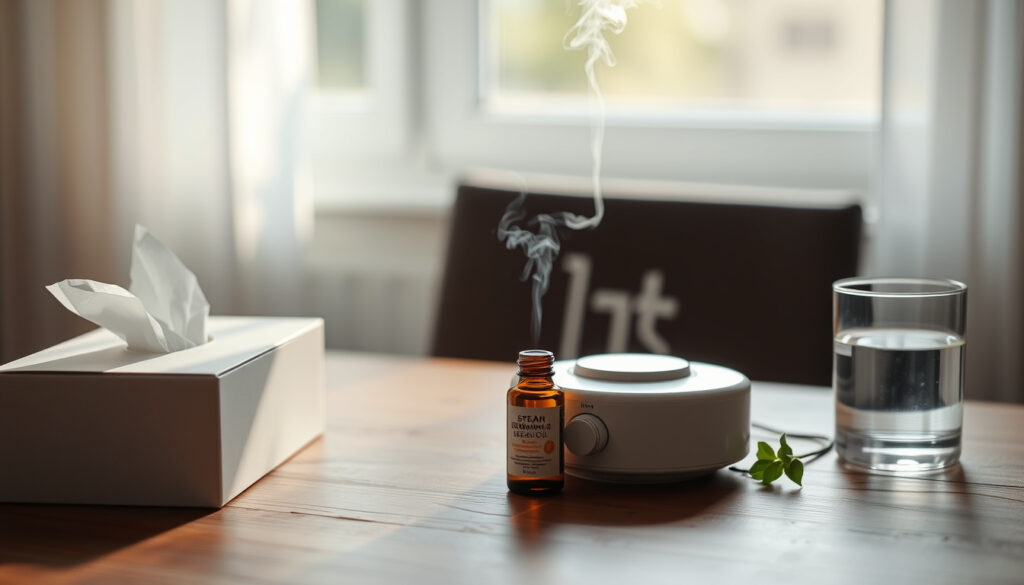
Immediate relief through steam inhalation
- Breathing in steam from a bowl of hot water or a warm shower helps thin mucus quickly, making it easier to clear (Healthline).
- Adding a few drops of eucalyptus or peppermint oil may enhance the decongestant effect (WebMD).
Steam works as a mechanical thinner—it hydrates the nasal passages and reduces the viscosity of mucus. The effect is temporary, lasting 30 to 60 minutes, but it’s safe to repeat several times a day.
Hydration and saline nasal rinse
- Drinking extra water and using a saline spray or neti pot keeps mucus thin and less sticky (Cleveland Clinic).
- Saline nasal irrigation is a first-line treatment that lessens thickened secretions and is available over-the-counter (Cleveland Clinic).
The FDA recommends using distilled or boiled water in neti pots to avoid infection (Healthline).
Elevating the head while sleeping
- Sleeping with an extra pillow or raising the head of the bed 6–8 inches prevents mucus from pooling in the throat overnight (Cleveland Clinic).
- For GERD-related cases, this elevation is doubly beneficial because it reduces acid reflux that can trigger mucus production (Cleveland Clinic).
Steam and saline are the fastest home remedies—start there before reaching for medication. Most acute cases respond within 24–48 hours of consistent use.
The implication: for most acute cases, simple home measures are enough. The challenge is identifying when you need something stronger.
What triggers post-nasal drip?
Allergic rhinitis and seasonal allergies
- Pollen, dust mites, mold, and pet dander are the most common allergens that trigger post-nasal drip (Cleveland Clinic).
- Antihistamines and intranasal corticosteroids specifically target this cause (WebMD).
Non-allergic triggers: cold air, spicy foods, smoke
- Cold air causes blood vessels in the nose to constrict and then dilate, leading to increased mucus (ENT Health).
- Spicy foods and smoke are nasal irritants that can trigger a drip reflex (Harvard Health).
Structural issues: deviated septum, enlarged turbinates
- A deviated septum can disrupt airflow and cause mucus to accumulate (WebMD).
- Enlarged turbinates physically block drainage, leading to chronic drip (JAMA Otolaryngology).
The pattern: knowing your trigger is the shortcut to selecting the right treatment. Allergy-driven drip responds to antihistamines; GERD-driven drip needs acid control.
What drink stops post-nasal drip?
Warm water with honey and lemon
- Warm liquids help thin mucus and soothe an irritated throat (HealthDirect).
Ginger tea as anti-inflammatory
- Ginger has natural anti-inflammatory properties that may reduce nasal swelling (Healthline).
Avoiding dairy and caffeine for some individuals
- No strong evidence that dairy increases mucus production, but some people report worsening after consuming dairy (Harvard Health).
The catch: staying hydrated is universally helpful, but specific drinks won’t replace addressing the root cause.
What stops post-nasal drip immediately?
Over-the-counter decongestants and antihistamines
- Oral antihistamines like cetirizine (Zyrtec) or loratadine (Claritin) reduce allergy-driven drip within hours (Cleveland Clinic).
- Decongestants like pseudoephedrine (Sudafed) shrink swollen nasal tissues to stop drip, but should not be used for more than a few days to avoid rebound congestion (WebMD).
Nasal corticosteroid sprays
- Steroid sprays like fluticasone (Flonase) and triamcinolone (Nasacort) start working within a few hours and are most effective for allergy-related drip (WebMD).
Saline irrigation with neti pot
- Using a neti pot with sterile saline can provide immediate relief by flushing out mucus and irritants (Cleveland Clinic).
Decongestant sprays (oxymetazoline) are effective but can cause rebound congestion if used more than three days. Stick to oral decongestants or nasal steroids for longer use.
The catch: immediate relief often means temporary relief. For chronic cases, you need to treat the underlying inflammation, not just the symptom.
How to know if phlegm is from post-nasal drip?
Symptoms that distinguish post-nasal drip from chest congestion
- Post-nasal drip typically produces a wet sensation at the back of the throat, frequent throat clearing, and a cough that gets worse when lying down (Cleveland Clinic).
- Chest congestion causes deeper coughing and phlegm that comes up from the lungs, often accompanied by wheezing (Healthline).
The ‘nasal tobacco’ test
- If you can swallow the mucus back down or feel it in the back of your nose, it’s likely post-nasal drip rather than chest congestion (WebMD).
Why this matters: confusing post-nasal drip with bronchitis or pneumonia leads to unnecessary antibiotics. The distinction is based on where the mucus originates.
What is the root cause of post-nasal drip?
The role of inflammation in nasal passages
- Inflammation from allergies, infection, or irritants causes the nasal lining to produce excess mucus as a protective response (Cleveland Clinic).
Acute vs chronic causes: infection, allergy, anatomy
- Acute post-nasal drip is most often caused by viral upper respiratory infections and usually resolves in 7–14 days (ENT Health).
- Chronic drip (>12 weeks) may be due to allergies, sinusitis, GERD, or structural abnormalities (Harvard Health).
When GERD is the hidden cause
- Up to 20% of chronic cough cases are linked to GERD, and post-nasal drip can be the only symptom of silent reflux (Cleveland Clinic).
The pattern: if you’ve tried all the home remedies and antihistamines without relief, consider GERD or a structural issue as the hidden driver.
What pressure points drain sinuses?
Acupressure for facial pressure relief
- Applying pressure to points near the bridge of the nose and cheekbones may help stimulate sinus drainage, though clinical evidence is limited (Johns Hopkins Medicine).
Sinus massage techniques for drainage
- Gentle circular massage over the sinus areas (forehead, cheekbones, nasal bridge) can provide temporary relief from pressure (Healthline).
When pressure points are ineffective
- No strong clinical data supports acupressure as a primary treatment for post-nasal drip; it is considered a complementary approach (Harvard Health).
The implication: pressure points are a comfort measure, not a cure. They work best as an adjunct to proven treatments.
Confirmed facts
- Post-nasal drip is a common symptom of allergies, sinusitis, and GERD (Cleveland Clinic).
- Steam inhalation and saline nasal rinses provide effective symptomatic relief (Healthline).
- Antihistamines reduce allergy-driven post-nasal drip (Cleveland Clinic).
- Warm liquids help thin mucus (HealthDirect).
What’s unclear
- The effectiveness of pressure points for sinus drainage is not well supported by clinical evidence (Johns Hopkins Medicine).
- Whether dairy increases mucus production is debated; current evidence does not support a strong link (Harvard Health).
- The role of vitamin D deficiency in post-nasal drip is emerging and not conclusively established (ENT Health).
What the experts say
Post-nasal drip is the accumulation of excess mucus in the sinuses and nose that drips down the back of the throat.
Cleveland Clinic (otolaryngology specialists)
GERD can cause post-nasal drip without obvious sinus symptoms.
Harvard Health (editorial team)
Chronic post-nasal drip often requires evaluation by an ENT specialist.
ENT Health (American Academy of Otolaryngology)
Steam inhalation and warm liquids are among the most effective home remedies for thinning mucus.
Healthline (medical review team)
For the millions of adults who live with persistent post-nasal drip, the path to relief starts with a clear diagnosis. Whether it’s allergies, GERD, or a structural issue, matching the treatment to the cause is the only way to stop the cycle. Ignoring chronic symptoms risks not just discomfort but deeper sinus infections and sleep disruption. For anyone still searching for answers, the next step is a conversation with a primary care provider or an ENT specialist.
bioresscientia.com, health.harvard.edu, pmc.ncbi.nlm.nih.gov, goodrx.com
Frequently asked questions
Can post-nasal drip be cured permanently?
It depends on the cause. Allergy-related drip can be well-controlled with avoidance and medication; structural issues may require surgery. There is no single permanent cure (Cleveland Clinic).
Is post-nasal drip contagious?
No, the condition itself is not contagious. However, if it is caused by a viral infection like a cold or flu, the underlying virus can be contagious (WebMD).
Does drinking water help post-nasal drip?
Yes. Staying hydrated helps thin mucus, making it easier to clear. Warm fluids are especially effective (HealthDirect).
Can post-nasal drip cause bad breath?
Yes, the bacteria in mucus that pools in the throat can produce volatile sulfur compounds, leading to halitosis (ENT Health).
What is the best over-the-counter medicine for post-nasal drip?
There is no single best medicine—the right choice depends on the cause. Antihistamines work for allergies, decongestants for congestion, and steroid sprays for inflammation (WebMD).
How long does post-nasal drip last after a cold?
Acute post-nasal drip from a viral infection typically resolves within 7–14 days. If it persists longer, it may be due to another underlying cause (ENT Health).
Does post-nasal drip go away without treatment?
In many acute cases, yes. Mild cases caused by a cold or temporary irritant often resolve on their own. Chronic cases usually require identifying and treating the root cause (Cleveland Clinic).
More related posts
 Tempus AI Stock Price – Current Close Performance Forecast
 Quelle Heure Est-Il En France – CET/CEST Time Guide for Paris
 Emily Deschanel: Diagnosis, Lawsuit, Family & Career
 Biggest Spider in the World – Goliath Birdeater Size and Facts
 La Fortuna Costa Rica: Worth It? Safety, Budget & Beach Distance
 Nike Zoom Vomero 5: Features, Reviews & Comparisons
 Anker Power Bank Recall – What Owners Need to Know
 Craig Kielburger Secondary School: Location & Rankings
